
THCA Hemp kief LaMousse 30%
Code: THCA010 THCA011 THCA012 THCA013 Choose variantRelated products


Product detailed description
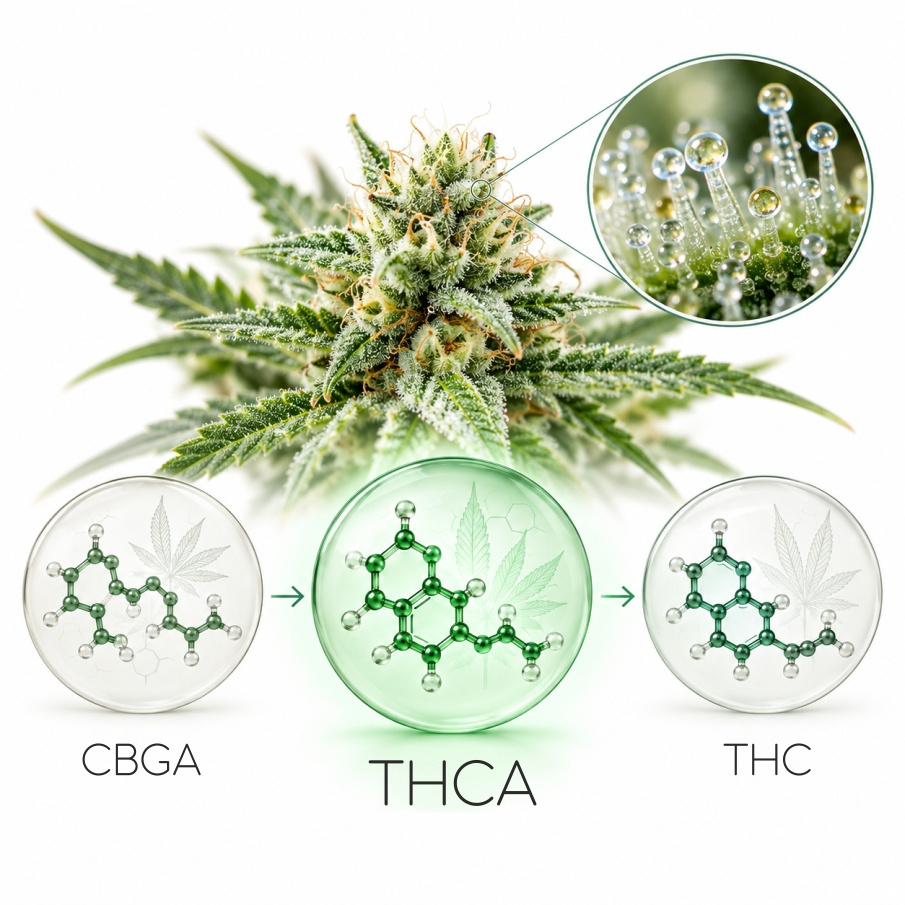
What is THCA?
THCA is an abbreviation for Δ9-tetrahydrocannabinolic acid, more precisely Δ9-tetrahydrocannabinolic acid A.
It is a naturally occurring cannabinoid and the main precursor to Δ9-THC in the cannabis plant. Unlike THC, it does not have a typical psychoactive effect on its own, but it is not biologically inactive. Research suggests it may have anti-inflammatory, neuroprotective, antiemetic, and other pharmacological effects. However, most of these findings come from laboratory studies. When heated, THCA converts to psychoactive THC, which fundamentally changes its effects and some of its risks.
It is a naturally occurring acidic form of THC that is produced in the cannabis plant. Simply put:
CBGA →THCA →THC
THCA is not the same as THC
The molecules are very similar, but THCA contains an additional carboxyl group –COOH. It is precisely this seemingly minor chemical change that significantly affects their pharmacological properties.
THCA is a very important, often dominant, cannabinoid in the fresh plant.During drying, storage, and especially when heated, it gradually converts to THC.
Is THCA psychoactive?
THCA itself is not considered a psychoactive substance in the same sense as THC.
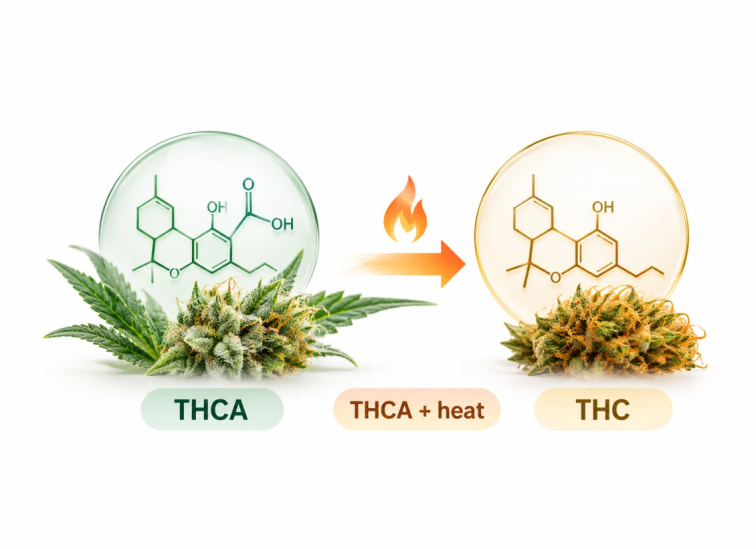
Under normal conditions, THCA alone does not produce the typical “high” associated with Δ9-THC. THCA is not psychoactive, but when heated, it converts to THC, which is psychoactive.
The mechanism is roughly as follows:
THCA + heat →decarboxylation →THC
Therefore, there is a big difference between:
- consuming unheated THCA
- smoking THCA flowers
- vaporizing
- baking
- heated extracts
When smoking or vaporizing, you are no longer consuming just THCA. A significant portion of the THCA is converted to THC by the heat
What is hemp kief?
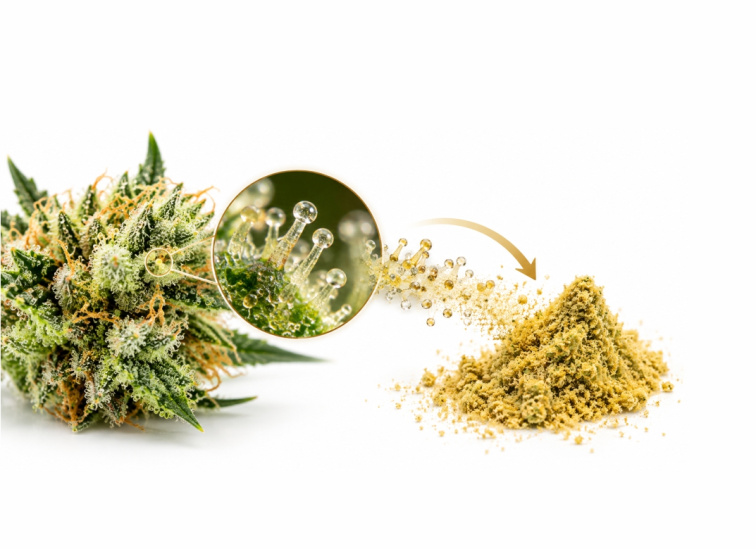
Hemp kief (also known as skaff) is a fine powder made up of detached trichomes —tiny crystalline glands on cannabis flowers that contain a high concentration of cannabinoids (such as CBD, CBG, or THC) and aromatic terpenes, depending on the variety of the cannabis plant from which it is derived.
High-quality hemp kief ranges in color from light yellow to yellow-brown.
If the kief has a greenish tint, it is no longer premium-quality pure kief, but rather what is known as “secondary” kief harvested from cannabis, where microparticles of cannabis leaves begin to fall off during harvesting, causing the kief to turn green. As the color changes, so does the quality; greenish kief contains far fewer cannabinoids.
The aroma of premium-quality kief should resemble that of fresh cannabis flowers.
What does LaMousse 30% mean?
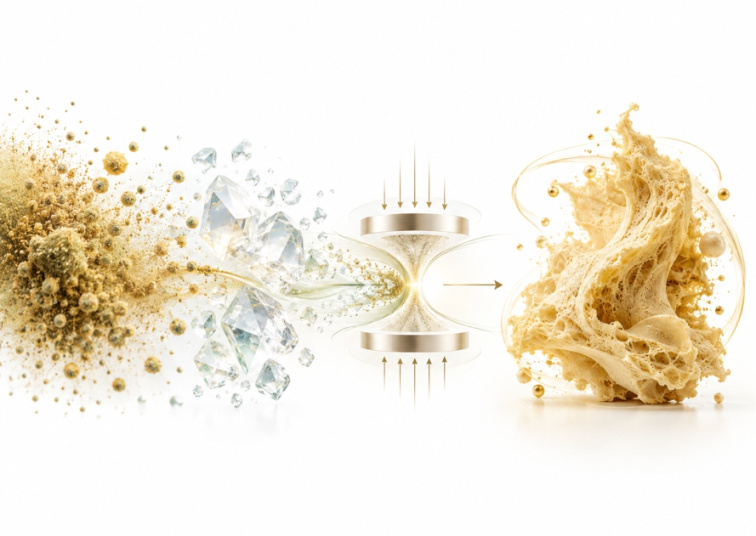
LaMousse 30% is a product based on a combination of THCA and premium hemp kief, processed into a smooth, compact consistency.
The 30% designation indicates the declared THCA content in the product.
During production, the individual ingredients are gently combined to create LaMousse’s characteristic structure—a soft, crumbly, and homogeneous substance that preserves the aromatic profile of the hemp material used.
Simply put:
THCA + hemp kief → processing → LaMousse 30%
The result is a product that combines a high THCA content with the natural character and texture of hemp kief.
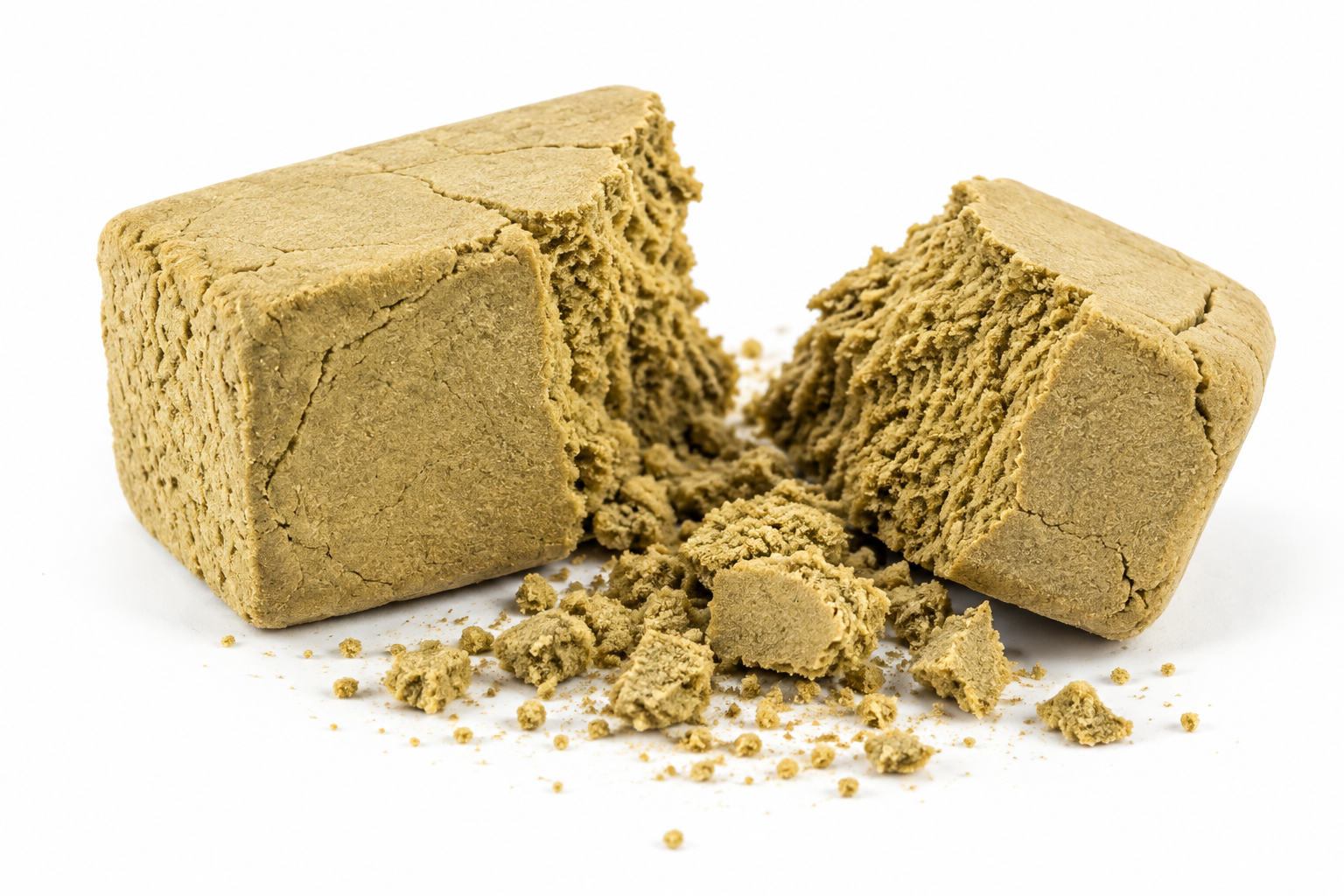
How can you tell if hemp kief is high-quality?
High-qualityhemp kief consists mainly of fine trichomes separated from the hemp flower. It is their purity that significantly influences the appearance, aroma, and overall character of the final product.
Premium kief is usuallylight yellow to golden brown in color, has a fine texture, and contains a minimal amount of visible leaf particles or other plant material.
Conversely,a more pronouncedgreen hue often indicates a higher proportion of fine plant particles that end up in the kief during less selective processing.
When evaluating kief, we therefore focus primarily on:
color → fineness → purity → aroma
The higher the proportion of trichomes themselves and the fewer plant impurities the kief contains, the purer and higher in quality the resulting material generally is.
Additional parameters
| Category: | THCA Hemp kief |
|---|---|
| Warranty: | According to the data on the packaging |
| EAN: | Choose variant |
| d9 THC: | < 0,3% |
| THCA: | 30% |
| CBD: | < 0,3% |
| CBG: | < 0,3% |

